
Between homework, exams, and other priorities, your student can sometimes feel overwhelmed with all they have to juggle.
You can help lighten their load by encouraging organization, prioritization, and self-compassion, even from afar.
Get organized.
Often, your student can feel overwhelmed – and organization can help.
Have a system
Helping your student find a good organizational system will help them keep track of important to-do’s, dates, and deadlines. Maybe they’re visual and would benefit from a whiteboard. Maybe they’d like a physical planner to glance at on-the-go. Or perhaps they can harness technology to create their system. Support your student as they explore what works best for them.
Declutter
Having an organized space can help make your student feel more focused and relaxed. Encourage them to keep their spaces tidy. Ask what areas tend to get cluttered and what ideas they have for how they could keep things neat. Sometimes, getting rid of unnecessary items makes space for the things that are important.
Set a routine
Ask your student about their routine. A consistent rhythm – especially in the morning– can set them up for success. Routines give their day structure and reduce stress, since they know how long and when something should be done.
Teach prioritization.
Equipping your student with prioritization techniques can help them confidently manage all they’re juggling. One technique may be more intuitive for your student. Encourage them to try out different ones or take elements from each and make up their own.
Triage
Suggest this method to your student: Ask them to look at their to-do list. Then, encourage them to label tasks as red (high priority), yellow (medium priority), or green (low priority). Red tasks get done first, then yellow, then green. This method can help your student feel less overwhelmed about their tasks and manage their time more effectively.
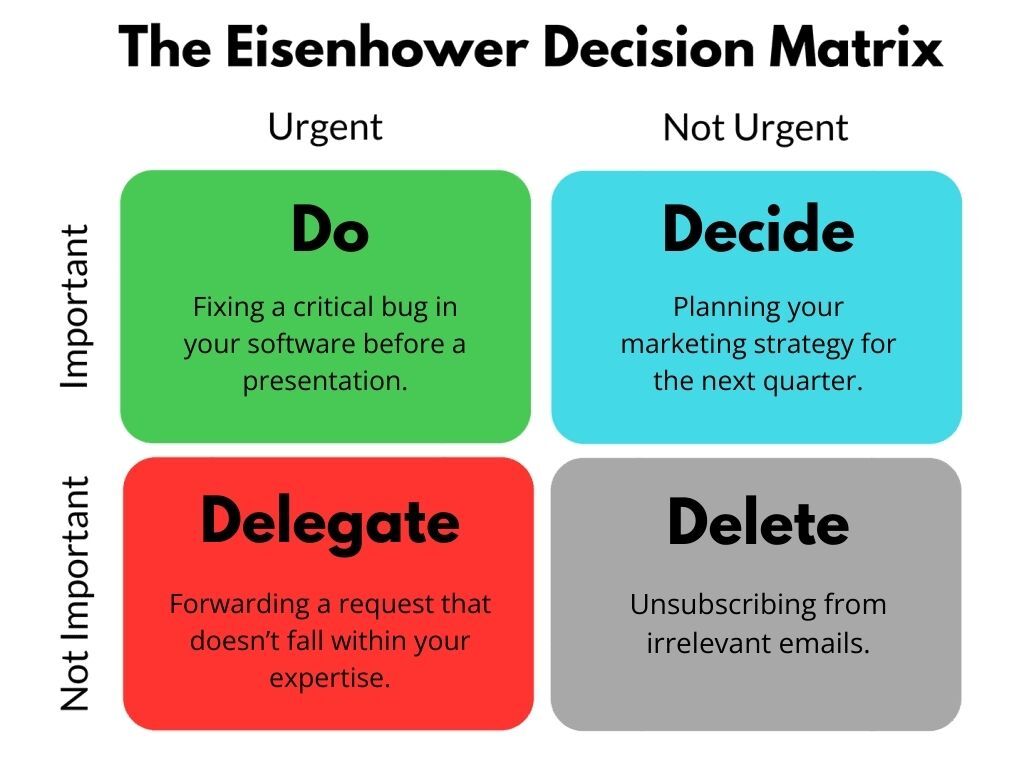
Eisenhower Matrix
This method can help your student visualize tasks in a simple quadrant format. Below is a graphic outlining the method. Each quadrant can help your student better understand the urgency of their tasks.
Write it out
Sometimes, the best methods are the simplest. Encourage your student to write their tasks on a sheet of paper or a whiteboard. From there, suggest they put a star beside the tasks that need immediate attention (for instance, tasks with upcoming deadlines).
Support self-compassion.
While juggling multiple responsibilities at once, your student’s feelings of stress or anxiety may manifest in negative self-talk. Even from afar, you can support your student’s self-compassion to help them feel more confident and prepared.
Positive reminders
Consider sending a simple, supportive message to boost your student’s mood. Let them know you’re ready to support them if they need you and that you believe in their capabilities.
Listen without judgment.
Ask your student how they’re feeling and give them space to open up. Sometimes, your student may feel relieved to get some things off their chest. While your student opens up, stay engaged and focus on validation.
Reframe the negative
When you hear your student talking negatively about themselves, consider helping them reframe the statements into something more positive. For instance, if your student tells you they aren’t smart enough to do a task, gently remind them of the history of their intelligence – moments you saw them think critically or their previous academic successes. Encouraging your student to reframe negative statements can help remind your student of their strengths and build self-compassion.
Takeaways.
Between homework deadlines, projects, exams, and activities, your student may find it stressful and overwhelming to juggle so many responsibilities. Helping your student build good organizational systems, implement prioritization techniques, and support self-compassion can make them feel more confident and prepared to tackle the many responsibilities thrown at them.